
Introduction
Building a successful website requires more than publishing content and optimizing individual web pages. Your website also needs to establish credibility, earn recognition, and become useful within its industry.
This is where off-page SEO becomes important.
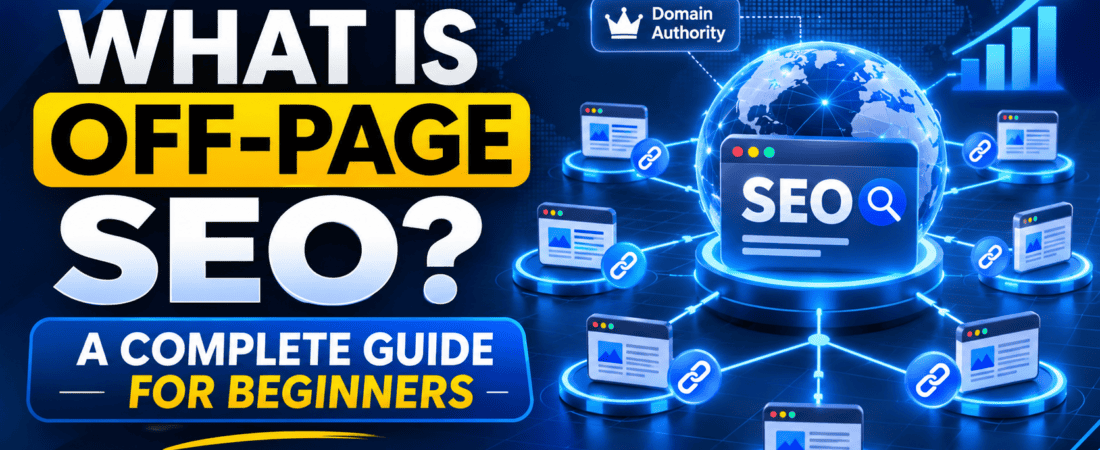
Off-page SEO includes activities performed outside your website that can support its online reputation, visibility, and search performance. These activities include earning relevant backlinks, digital PR, brand mentions, content promotion, and building relationships within your industry.
However, off-page SEO is not simply about collecting as many backlinks as possible. The relevance, context, quality, and legitimacy of your online presence matter.
In this guide, you will learn what off-page SEO means, how it works, which techniques businesses can use, and how to approach it without relying on manipulative practices.
What Is Off-Page SEO?
Off-page SEO refers to optimization activities that take place outside your own website to help establish its reputation, relevance, and visibility across the internet.
Unlike on-page SEO, which focuses on elements such as page content, headings, internal links, and title tags, off-page SEO focuses on how your website is represented and referenced elsewhere online.
For example, imagine that you publish a detailed guide about cybersecurity. Another reputable technology website finds your guide useful and references it in one of its articles.
That editorial reference may help readers discover your website. It can also provide search engines with additional context about your content and its relevance.
Backlinks are an important part of off-page SEO, but they are not the only activity involved.
Why Is Off-Page SEO Important?
People do not discover websites through search engines alone. They also find businesses through industry publications, recommendations, online communities, social platforms, and other websites.
A well-planned off-page SEO strategy can support several objectives:
1. Improving online visibility
When relevant websites reference your content, their audiences may discover your business. This can create additional opportunities to attract visitors.
2. Building industry credibility
Being mentioned by respected publications, professional communities, and relevant websites can help establish your business as a recognizable participant in its industry.
3. Helping search engines discover content
Search engines use links to discover pages and understand relationships between different pages and websites.
4. Attracting referral traffic
A useful link on a relevant website can bring visitors directly to your website, independently of whether they click through from a search result.
5. Developing a recognizable brand
Consistent mentions, useful contributions, and genuine industry relationships can help people become more familiar with your business.
Off-page SEO should support a wider marketing strategy rather than being treated as a shortcut to higher rankings.
How Does Off-Page SEO Work?
Search engines evaluate many different signals when determining which pages to show for a particular query.
Off-page activities can contribute to the information available about your website, including who references your content, the context of those references, and how people discover your business.
Consider this example:
A company publishes an original research report about website performance. A technology publication references the report, an industry newsletter shares it, and professionals discuss its findings.
These activities can generate brand exposure, relevant referral visits, and legitimate editorial links.
The important point is that the company created something useful that other people chose to reference.
There is no guarantee that any single backlink or mention will improve rankings. Search performance depends on many factors, including relevance, content quality, competition, and technical accessibility.
On-Page SEO vs Off-Page SEO vs Technical SEO
SEO has several connected areas. Understanding their differences helps businesses create a more complete optimization strategy.
On-Page SEO
On-page SEO focuses on the content and elements within individual website pages.
Examples include:
- Writing useful and relevant content.
- Optimizing title tags and headings.
- Improving page structure.
- Using descriptive internal links.
- Adding meaningful image alt text.
Off-Page SEO
Off-page SEO focuses on your website’s reputation and visibility beyond its own pages.
Examples include:
- Earning relevant editorial backlinks.
- Digital public relations.
- Industry publications and mentions.
- Content promotion.
- Genuine business and industry relationships.
Technical SEO
Technical SEO focuses on making your website accessible, understandable, and efficient for search engines and visitors.
Examples include:
- Improving crawlability.
- Fixing indexing problems.
- Managing redirects.
- Improving mobile usability.
- Maintaining a clear website structure.
These areas work together. Strong external references cannot compensate for a website that provides a poor experience or contains little useful information.
Important Off-Page SEO Techniques
There are several ways to develop your website’s presence beyond its own pages. The right approach depends on your industry, audience, resources, and business objectives.
1. Link Building
Link building is the process of earning or acquiring links from other websites to your own.
A relevant editorial link can help readers discover useful resources and provide search engines with a path to your content.
Some legitimate link-building approaches include:
- Creating original research and useful resources.
- Developing industry relationships.
- Promoting genuinely helpful content.
- Contributing expert insights to relevant publications.
- Earning references from people who find your content valuable.
The objective should be to earn meaningful references, not simply increase the total number of backlinks.
2. Guest Posting
Guest posting involves contributing an article to another website or publication.
It can help businesses share expertise with a new audience, develop industry relationships, and build brand awareness.
A responsible guest-posting strategy should prioritize:
- Websites with relevant audiences.
- Original and useful article ideas.
- Genuine editorial standards.
- Clear author information.
- Proper disclosure and link qualification where a placement is sponsored or paid.
A guest post should provide value to the publication’s readers even if they never visit the author’s website.
3. Digital Public Relations
Digital PR focuses on gaining online attention and editorial coverage through useful information, original research, expert commentary, and newsworthy stories.
For example, a software company might publish original research about website security trends. Journalists and industry publications may find the findings useful and reference the report.
Digital PR can support brand recognition, referral traffic, and legitimate editorial mentions.
4. Brand Mentions
A brand mention occurs when another website, publication, or online source refers to your company.
Not every brand mention contains a clickable backlink. However, mentions can still help people discover and recognize your business.
Businesses can encourage natural mentions by publishing valuable resources, participating in relevant industry discussions, and building relationships with publishers and professionals.
5. Relevant Business Listings
Accurate business information across relevant directories and industry platforms can help potential customers discover a company.
For local businesses, maintaining consistent business details across appropriate platforms is particularly useful.
Avoid submitting your website to large numbers of unrelated, low-quality directories simply to create backlinks.
6. Content Promotion
Publishing valuable content is only one part of content marketing. People also need opportunities to discover it.
Content promotion may include:
- Sharing useful resources on professional social networks.
- Sending relevant newsletters.
- Contacting publishers who may genuinely benefit from a resource.
- Participating in relevant online communities.
- Sharing original research with industry professionals.
Promotion should be relevant and helpful rather than repetitive or automated spam.
7. Community Engagement
Participating in relevant professional communities can help businesses understand their audiences and develop industry relationships.
For example, an SEO agency can contribute useful answers to discussions about technical SEO, content strategy, and website growth.
The purpose should be to contribute knowledge and build trust, not to insert promotional links into every conversation.
What Makes a Backlink Valuable?
Not all backlinks provide the same level of usefulness.
When evaluating a backlink opportunity, consider the following factors:
Relevance: Does the linking website publish content related to your industry or topic?
Editorial context: Is your link included naturally within useful content, with a clear reason for readers to visit it?
Website quality: Does the website publish original, useful content and maintain reasonable editorial standards?
Audience value: Could the link help real readers discover something useful?
Placement transparency: Is the link editorially earned, or is it part of a paid or sponsored arrangement?
Link attributes: Is the link appropriately qualified when required?
Third-party metrics such as Domain Rating (DR) and Domain Authority (DA) can be used as comparative research tools, but they are not Google metrics and should not be treated as direct measures of Google’s ranking evaluation.
A website with a high third-party score is not automatically a suitable backlink opportunity.
White-Hat vs Black-Hat Off-Page SEO
The methods used to develop a website’s external presence matter.
White-Hat SEO
White-hat SEO focuses on sustainable practices that provide genuine value to users.
Examples include:
- Creating original research.
- Earning relevant editorial references.
- Publishing useful guest contributions.
- Building genuine professional relationships.
- Promoting valuable resources.
Black-Hat or Manipulative SEO
Manipulative practices attempt to influence search rankings through artificial or deceptive methods.
Examples include:
- Automated backlink creation.
- Link schemes designed primarily to manipulate rankings.
- Excessive reciprocal link exchanges.
- Paid links intended to pass ranking credit without proper qualification.
- Low-value content created primarily to manipulate linking signals.
Google identifies these practices within its link spam policies. Paid advertising and sponsorship are legitimate commercial activities, but their links should be appropriately qualified using rel=”sponsored” or an acceptable rel=”nofollow” attribute.
Businesses should review Google’s official spam policies before adopting any link-building campaign.
Common Off-Page SEO Mistakes
Many businesses focus on backlink quantity while overlooking the quality and purpose of their activities.
Here are common mistakes to avoid:
- Choosing websites based only on DA or DR.
- Building links from unrelated websites.
- Using the same keyword-rich anchor text repeatedly.
- Publishing low-quality guest posts solely to place links.
- Using automated tools to create backlinks at scale.
- Ignoring the editorial standards of publishing websites.
- Purchasing links that are intended to manipulate rankings.
- Measuring success only by the total number of backlinks.
- Ignoring referral traffic and brand visibility.
- Expecting immediate ranking improvements from a new campaign.
A more effective approach is to evaluate each activity according to its relevance, quality, transparency, and potential value to the intended audience.
Off-Page SEO Checklist
Use this checklist when planning or reviewing an off-page SEO campaign.
- Identify your target audience and industry.
- Research relevant websites and publications.
- Review potential publishing websites carefully.
- Create useful content worth referencing.
- Develop a natural and relevant outreach strategy.
- Evaluate backlinks in their editorial context.
- Qualify sponsored and paid links correctly.
- Monitor referring domains and backlink patterns.
- Review referral traffic and brand mentions.
- Measure progress against clear business objectives.
This checklist is a starting point. Different businesses may need additional activities depending on their goals and market.
How to Measure Off-Page SEO Performance
Off-page SEO should be measured using multiple indicators rather than one isolated metric.
Useful measurements include:
Referring domains: The number of distinct websites linking to your website, as reported by your chosen SEO tools.
Backlink relevance: Whether the websites and pages referencing your content are relevant to your subject or industry.
Referral traffic: Visitors who arrive through links on other websites. Google Analytics can help measure this traffic.
Brand mentions: References to your company across relevant publications and online platforms.
Organic search performance: Changes in search impressions, clicks, and query performance through Google Search Console.
Conversions: Leads, inquiries, or other meaningful actions generated by visitors.
No single metric proves that a link-building campaign caused a ranking improvement. Look at the wider performance picture and consider other changes made to your website.
How Long Does Off-Page SEO Take?
There is no universal timeline for off-page SEO results.
The time required depends on factors such as:
- Your website’s existing reputation and history.
- The competitiveness of your industry.
- The quality and relevance of your content.
- The type of external references you earn.
- Your website’s technical condition.
- How consistently you execute your strategy.
Some activities, such as referral traffic from a newly published article, may generate visitors relatively quickly. Changes in organic search performance can take longer and cannot be guaranteed.
Businesses should evaluate progress over time rather than expecting immediate results from individual backlinks.
Frequently Asked Questions
Is off-page SEO only about backlinks?
No. Backlinks are an important part of off-page SEO, but the broader concept also includes digital PR, brand mentions, content promotion, and genuine industry engagement.
Are all backlinks good for SEO?
No. A backlink’s usefulness depends on its context, relevance, quality, and how it was obtained. Manipulative link schemes can violate Google’s spam policies.
Is guest posting still useful for SEO?
Guest posting can help businesses reach relevant audiences and share expertise. However, publishing articles primarily to manipulate rankings through links can fall under Google’s link spam policies.
What is the difference between DA and DR?
Domain Authority (DA) and Domain Rating (DR) are third-party metrics developed by different SEO companies. They are not Google ranking scores and should not be treated as official measurements of website authority.
Should businesses buy backlinks?
Businesses should not purchase links for the purpose of manipulating search rankings. Paid placements used for advertising or sponsorship should have the appropriate link qualification.
Can a new website benefit from off-page SEO?
Yes. A new website can begin developing its online presence by publishing useful resources, building industry relationships, and earning relevant references. Results will depend on the quality of the work and the wider competitive environment.
What is the difference between link building and off-page SEO?
Link building is one activity within off-page SEO. Off-page SEO is broader and includes other methods of developing visibility, recognition, and credibility outside your website.
Conclusion
Off-page SEO is an important part of developing a website’s presence across the internet. It involves more than acquiring backlinks: businesses also need useful content, relevant industry relationships, genuine editorial references, and a consistent approach to building brand recognition.
The strongest strategy begins with understanding your audience and creating something worth referencing. From there, businesses can develop meaningful outreach, earn relevant mentions, and evaluate progress through measurable indicators.
At ZIF Technologies, we believe that sustainable off-page SEO should focus on relevance, context, quality, and trust. A thoughtful strategy is more valuable than chasing backlink numbers without considering their purpose.
Need a structured link-building strategy for your website? Explore ZIF Technologies’ off-page SEO and link-building services to learn how a relevant, transparent approach can support your digital growth.
References and Further Reading
- Google Search Central — Creating Helpful, Reliable, People-First Content
- Google Search Central — Spam Policies for Google Web Search
- Google Search Central — Link Best Practices
- Google Search Central — Qualify Outbound Links
- Google Search Central — SEO Starter Guide
Editorial note: This article is educational and does not guarantee specific rankings, traffic, or backlink outcomes.